Giants of the High Desert
The Family Legacy of Ruby Mountain Heli. By Liz Worgan.
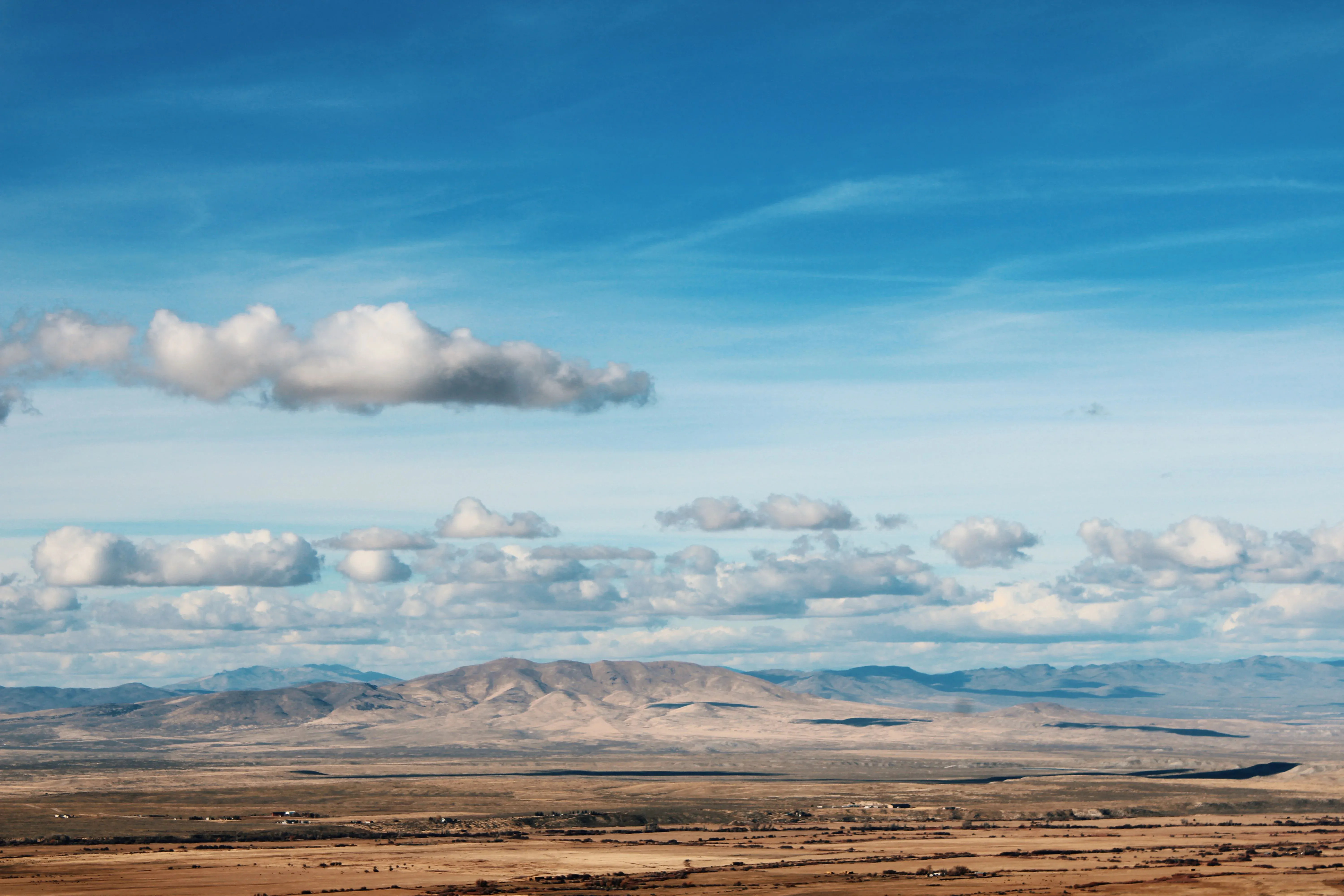
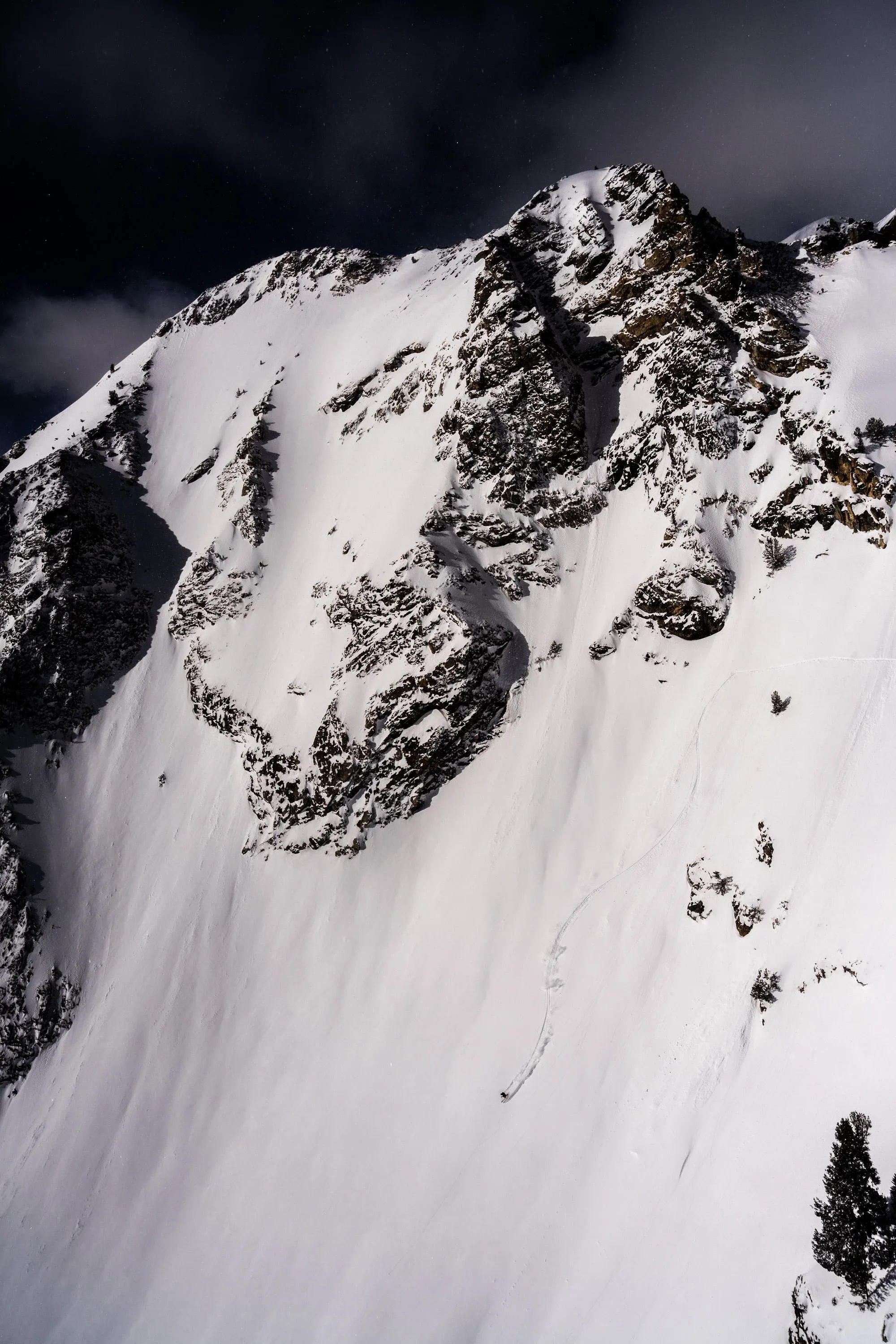
In Northern Nevada’s high desert, the stunning Ruby Mountains unexpectedly jut out into the sky, jagged spires that span over 90 miles of surreal backcountry beauty. They are giants of the land, with over 50 of the peaks towering more than 10,000 feet, snow-capped and awe-inspiring and practically untouched. This area is most commonly accessed via interstate 80, where just a few hours to the east or west, you’d be passing through the Bonneville Salt Flats or the Fernley Sink, bone-dry expanses of proverbial desert wasteland – beautiful in their own right, but not like the Rubies.
On 120 acres just east of Lamoille Canyon (which itself might be the country’s best-kept secret), the Ruby 360 Lodge looks out over a small slice of the Great Basin, thousands of miles of temperate desert speckled with sagebrush and cattle. At night, the artificial lighting of Spring Creek and Elko flickers in the distance, while above the roof of the lodge, the Milky Way plunges across the sky, millions of glittering spores of starlight. This place feels like the center of the universe, and for the Royer family, it is.
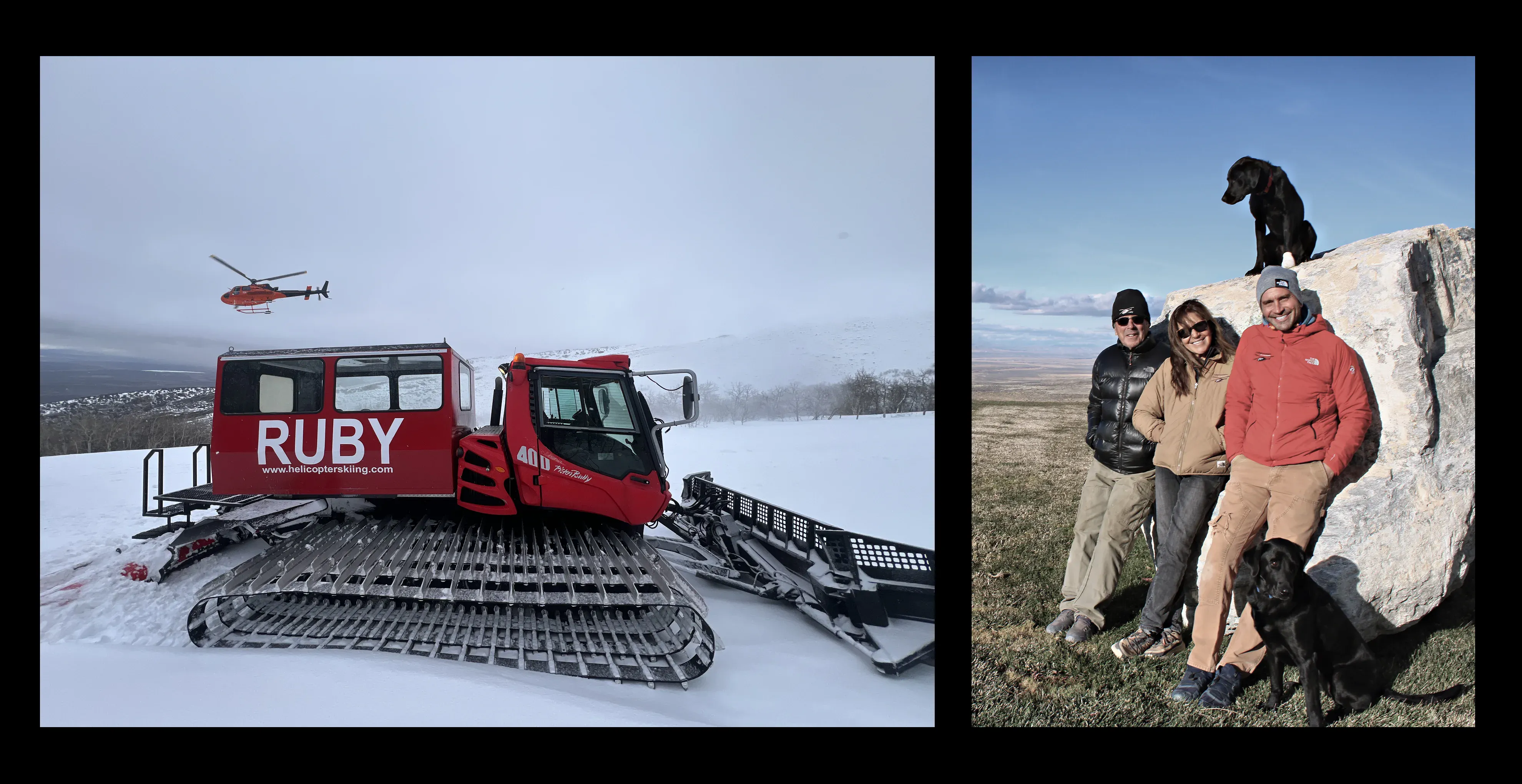
Joe, his wife, Francy, and their son, Mike, own and operate this land in the form of Ruby Mountain Heli, a helicopter-accessed ski and snowboard guide service that is about to begin its 49th season. Seven days a week from January to April, groups of 16 are taken on the experience of a lifetime. Guests are housed and fed in the Ruby 360 Lodge, a worthwhile experience of its own, and brought to the backcountry by helicopter. If the weather prevents flying, the Royers’ fleet of PistenBullys provides snowcat-accessed skiing and snowboarding as an alternative. Here at Ruby Mountain Heli, what you get is the grit of the high desert, snowfall with density comparable to the Wasatch, and a type of laid-back luxury at the lodge that has become increasingly elusive in recent years as the ski industry shifts.
By his own estimation, this will be Joe Royer’s 75th year on skis. His first turns were taken in the Midwest at the age of 2 and since then, even in years with injuries, Joe has never missed a full season. Though he was born in Chicago, Joe spent most of his youth in Marin County, California, just north of San Francisco, where he was “always in trouble,” but surfing kept him grounded. His family was also a big skiing family, frequently venturing to many of the original eastern Sierra ski areas. “This was prior to the sixties,” Joe explained. “There was no Olympic draw in Tahoe yet. Alpine Meadows was just getting going. We skied Sugar Bowl, Badger Pass, China Peak.”
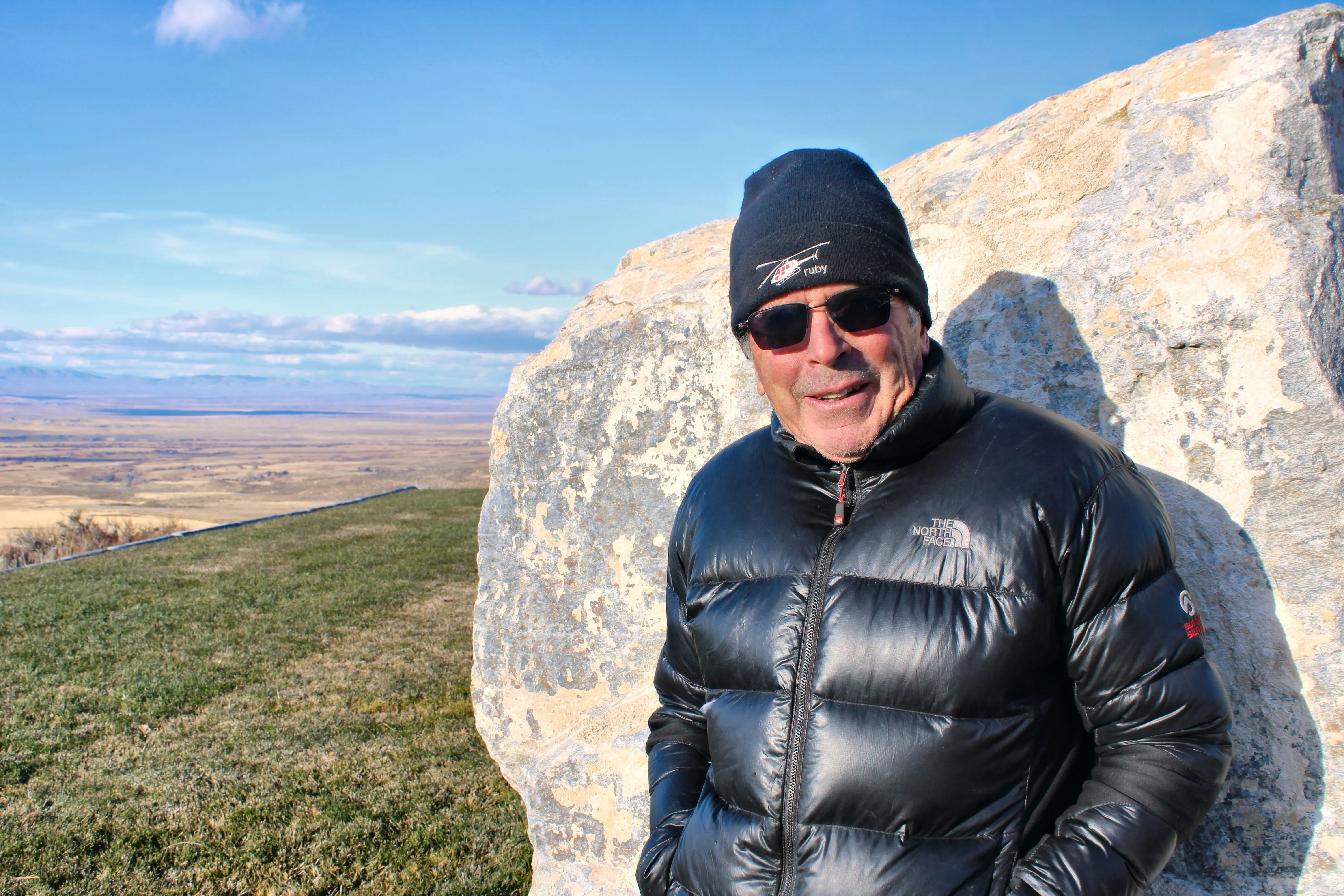
Photo: Joe Royer in November 2025
In those days, it was a quieter but special time to be a skier: less crowds, less traffic, colder temperatures. Joe made sure the sport remained an integral part of his life. In the late 60s, he got a job at Alta in Utah and just a few years later, he began working as a ski patroller at Snowbird, which at the time was a newly-opened resort. On his drive crossing Interstate 80 between Little Cottonwood Canyon and Marin County, he’d look out the window near Elko and see snow on the mountains in the distance to his left.
Nevada is the most mountainous state in the continental United States, boasting over 300 named mountain ranges. Often relegated to anecdotes about the hot and flashy southern mecca of Las Vegas, the rest of the state tends to stand in the shadow of Sin City myths. Nevada's outdoor beauty and possibility eschew public knowledge. All Joe needed to see was the snow on top of those peaks for him and a few colleagues to give it a chance.
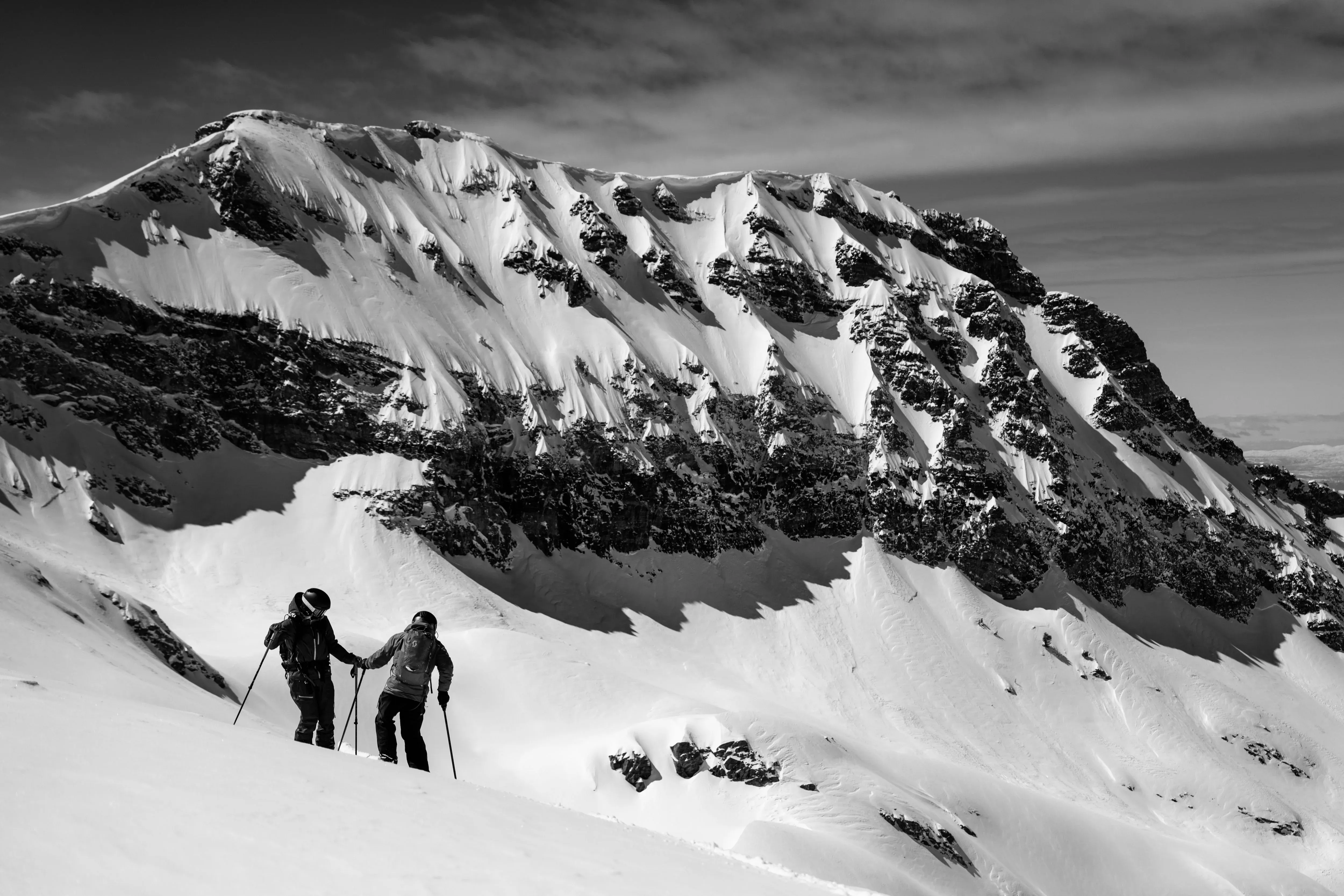
Photo: Matt Bansak
“The Rubies were like the edge of the earth, just so remote,” Joe told us. “That very first ski run was a line down south, and it was awesome. It was a little spooky. You just have this feeling of knowing that you’re doing something that no one else has ever done before. But it was awesome.”
Their first season as an official operation, they had just 17 participants in heli-skiing the entire year, but slowly, that number started to grow. Operating under a special-use permit from the USDA/Forest Service, curiosity started to increase. There was a certain mysticism – bordering on disbelief – about skiing a mountain range in Northeastern Nevada.

Photos: Matt Bansak
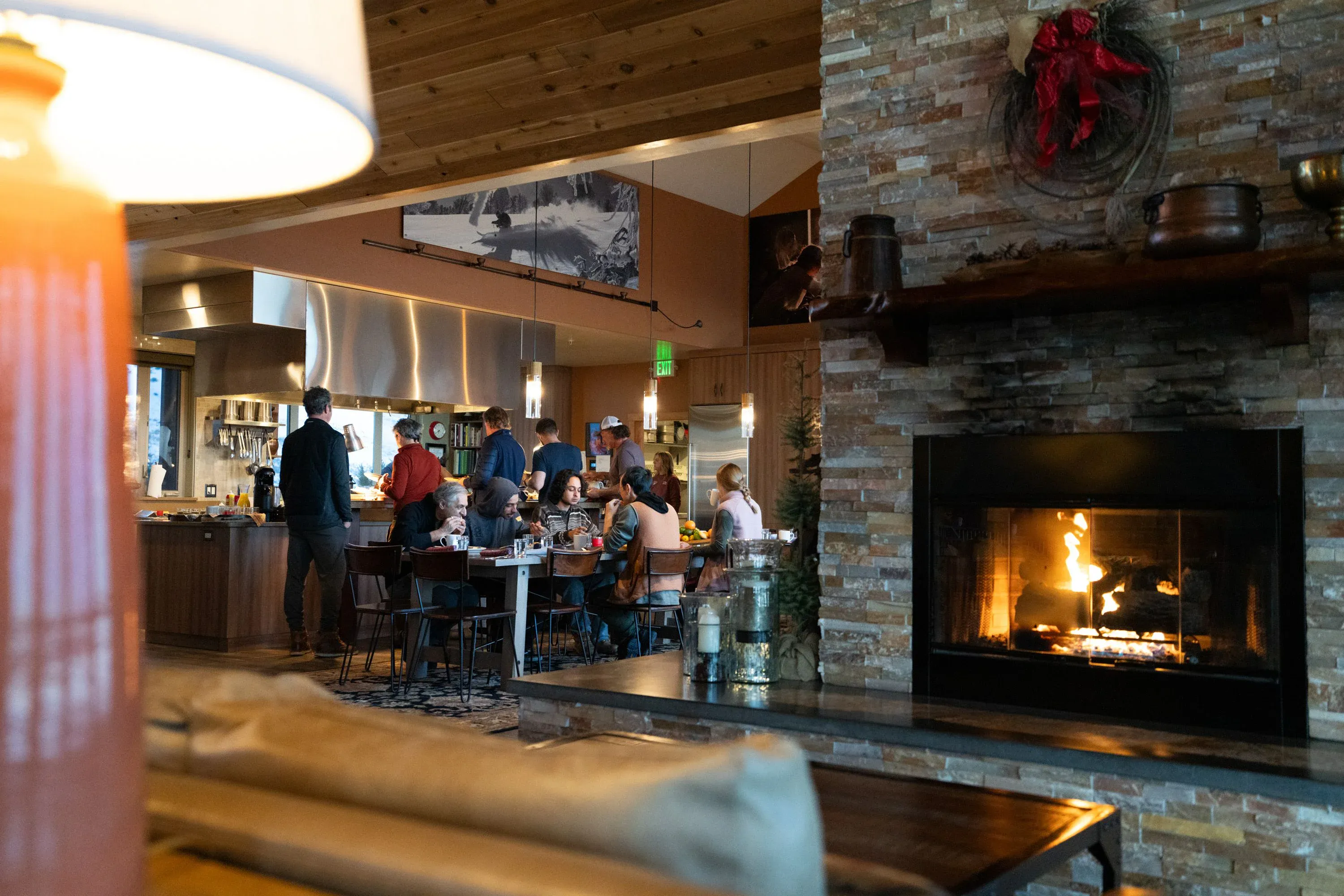
“What really helped us grow was Francy,” Joe explained. “After we got married, she was just such a great partner. She was organized, and she was just crucial to our success.” Francy’s knack for making things happen started to shine when it came to guest experience. It was her idea to start including meals as part of the agenda at their basecamp. She cooked the food herself, something that Mike cited as a fond childhood memory: Getting home from school and helping his mom prep ingredients and watching her flip through her library of cookbooks.
“The food was so good that people came up here just for that, and the skiing was secondary,” Joe added. His wife’s contributions put their whole operation on the map.
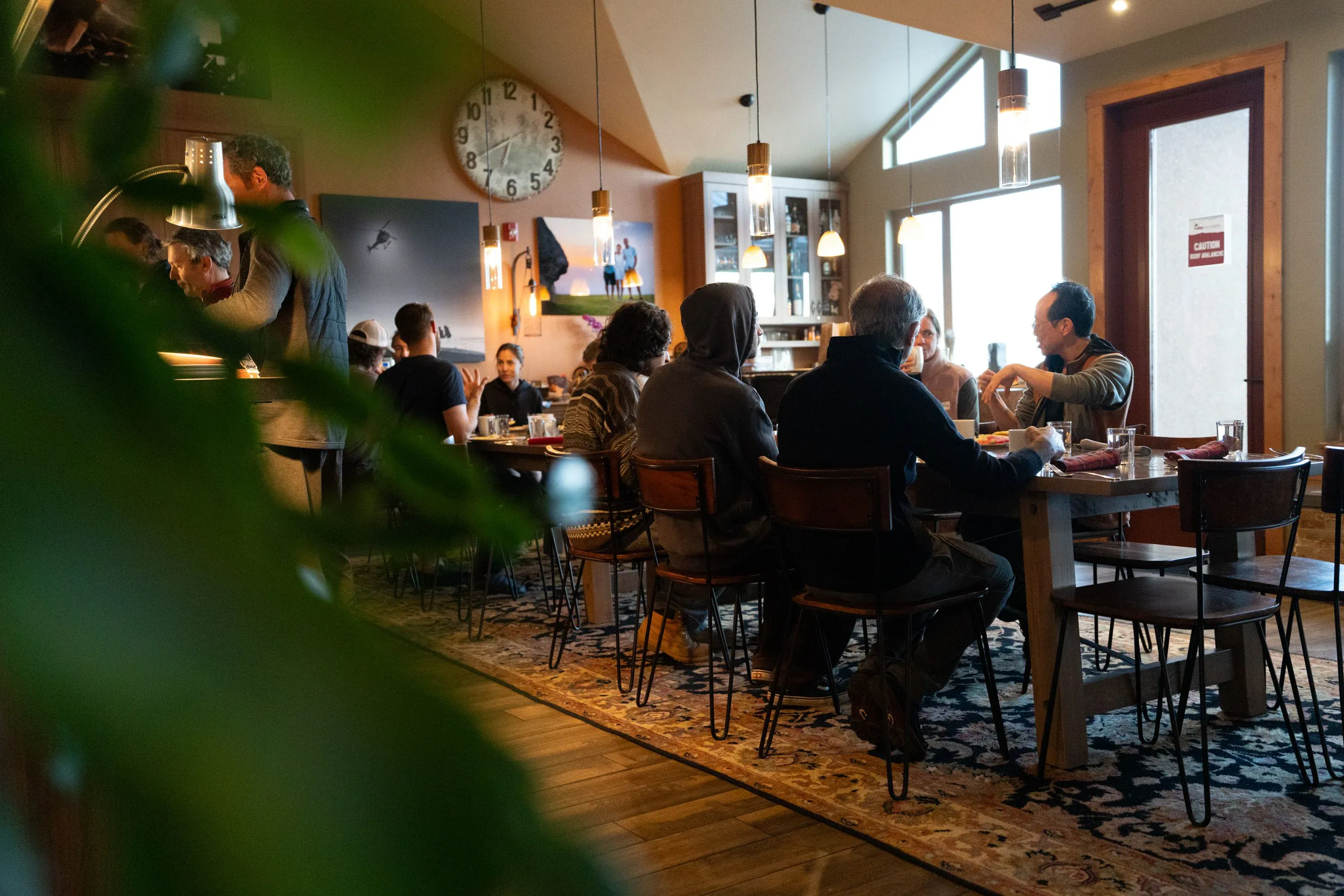
Mike is the one running the show these days, and he carries both his father’s visionary spirit and his mother’s creative ability for getting things done the right way. The inception of the Ruby 360 Lodge was, as Joe puts it, “all Mike.” It opened its doors for the first time in 2017, a structure that looks humble from the outside, but the halls echo with the energy of everyone who has passed through, the fleeting nerves of hoping for your best day of skiing ever. Upon entering the lodge, you are greeted by a grand piano, but also by a cozy seating area and an open kitchen. Large windows fill the place with natural light, and at sunset, the whole interior of the lodge vibrates pink and orange with warmth.
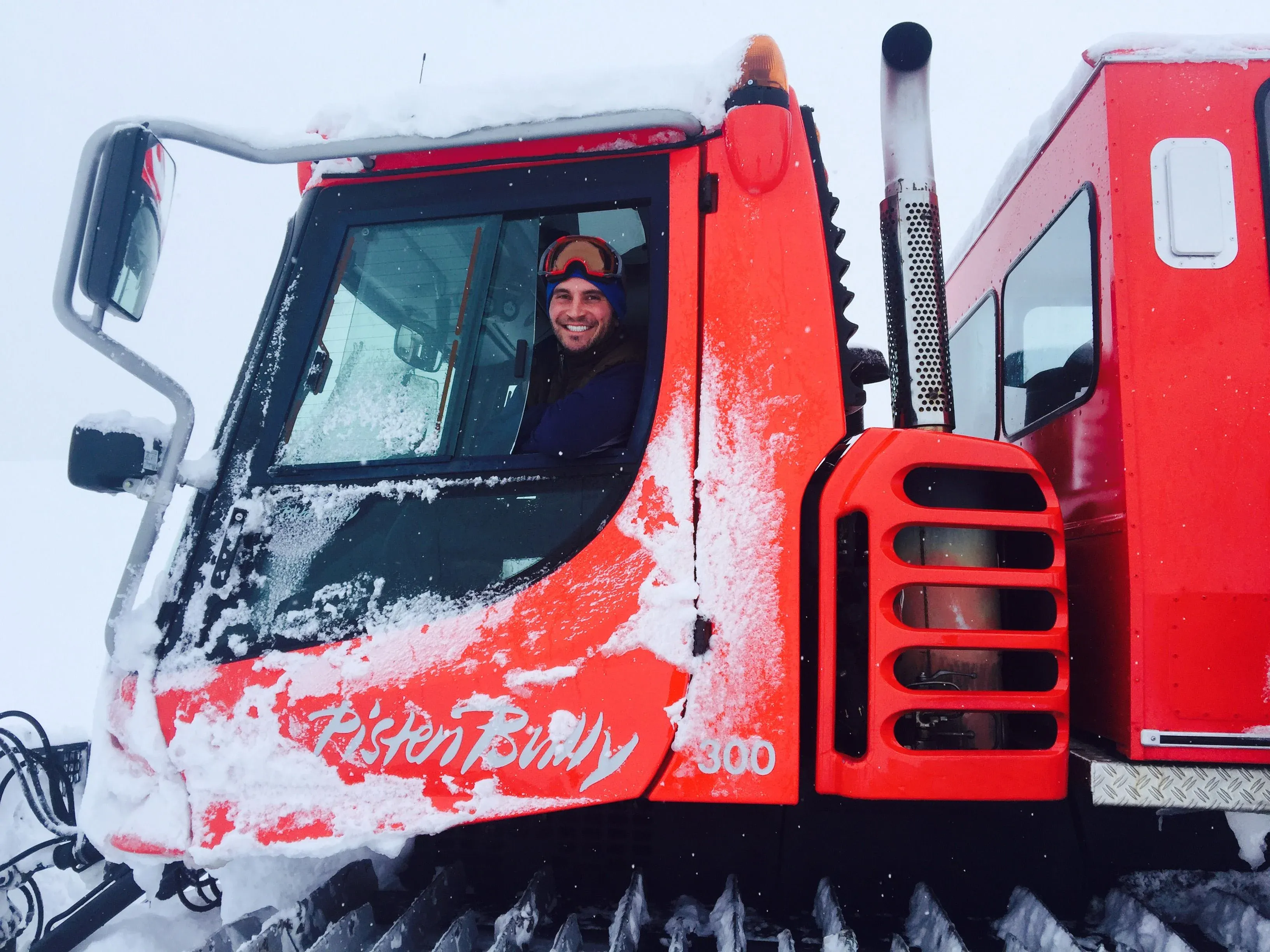
Photo: Mike Royer in a PistenBully
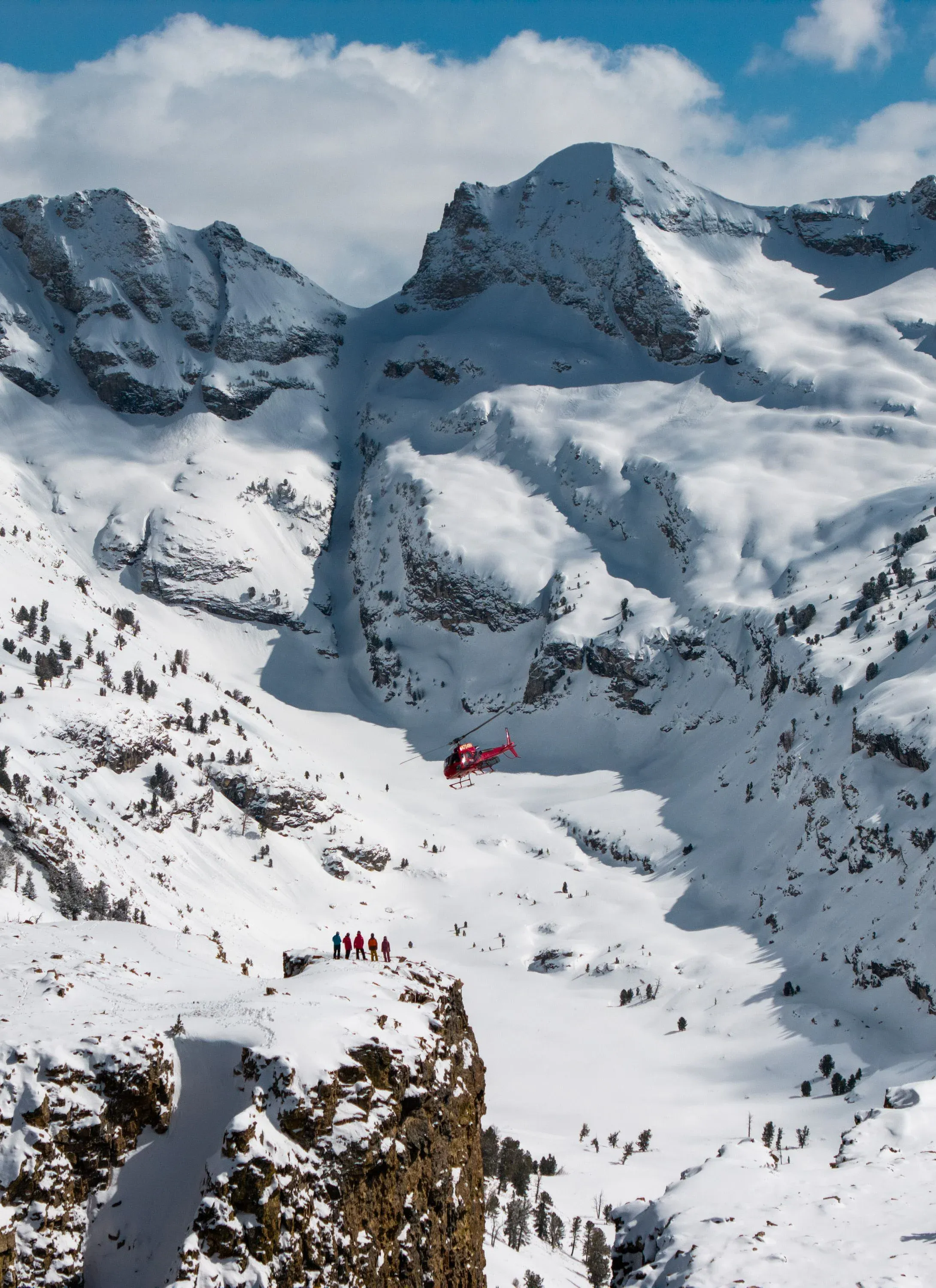
Photo: Matt Bansak
This is all part of that guest experience ethos that Mike inherited from his parents, where skiing is at the core. Every day, Ruby Mountain Heli focuses on finding the absolute best possible conditions for their guests. If weather prevents a sunny powder day, Mike has a number of stops in place to ensure that guests’ money is well-spent and they walk away with great memories, regardless of what the weather may have done. Ruby Mountain Heli’s cat skiing program is a necessary and reliable back-up plan.
In the late 80s, Joe picked up a couple of PistenBully 170s, hoping they could help keep roads clear and provide transport for backcountry access.
“I was never good at telling people they weren’t going to go skiing,” Joe explained. He wanted to prevent bad weather days from keeping his guests stuck at basecamp. The PistenBullys proved to be very effective, and since then, the cat skiing program has continued to evolve over the past four decades.
“The snowcat program here is very important to our business,” Mike insisted. “People sign up to go on a heli skiing trip, and the reality is, in most other operations, the weather can prevent you from going out. But here, you are guaranteed to go skiing, and that is because of the PistenBullys. We are able to offer skiing every single day.”
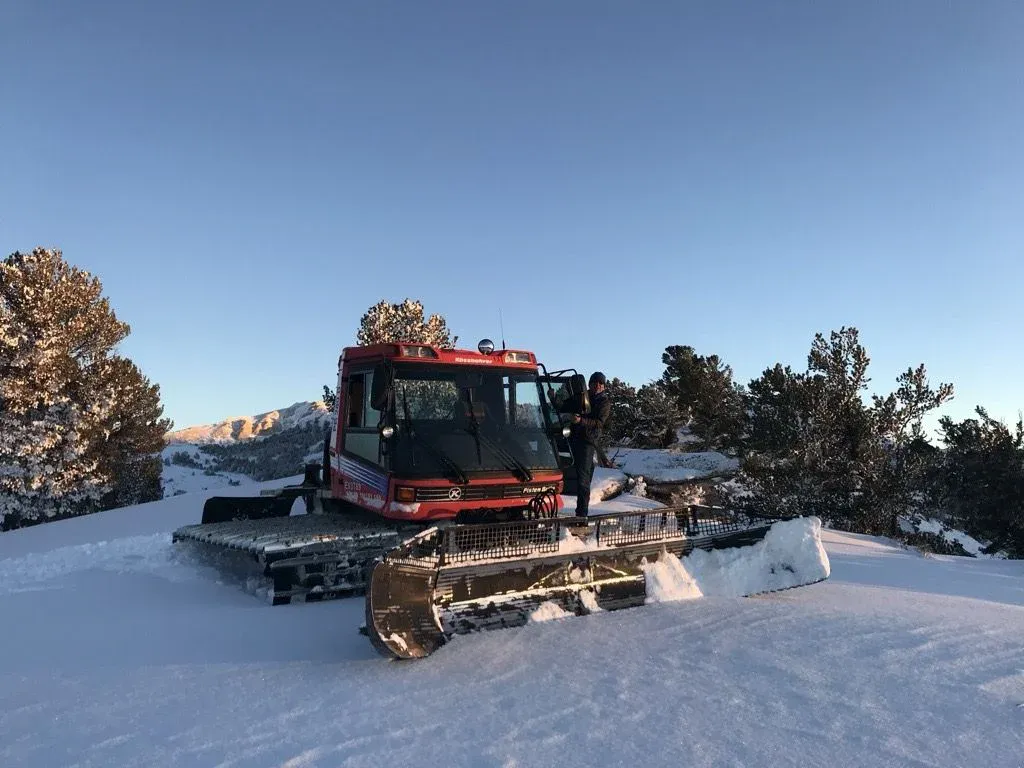
Mike further explained how the PistenBullys play a crucial role, sharing, “Often times, we have scenarios where a storm will be moving out, so we can take the snowcat up in the morning for the first few runs, until the weather clears enough for a helicopter to fly. Other times, we start the day flying and then transition from heli skiing to cat skiing. And then sometimes we take a cat up to a staging area, and we can fly out from there. We are in a PistenBully at some point of the day almost 50% of the days. It is a really efficient program that gets people out on the mountain with no delay.”
Ruby Mountain Heli has two personnel carriers, both PistenBully 600s affixed with 8-man cabins, which are staged out in front of the Ruby 360 Lodge. The daily group of 16 will split into two groups, load up their gear, and climb inside each cabin. From there, they frequently make the trip up to Conrad Creek, bringing guests to an elevation of nearly 10,000 feet.
“What’s interesting about the cabin cats is that they’re so social,” Mike added. “When you get in a helicopter, it's loud, there are nerves, and it’s a pretty quick flight. But in the cats, with a 40-minute ride up, plus the additional 10-15 minutes you get for each lap of a new run, they all talk and socialize and tell jokes. It’s actually kind of a cool moment.”
Ruby Mountain Heli also has two PistenBully 400s that are used for maintenance, such as clearing and maintaining roads – not just operations-related roads like the trail to Conrad Creek, but their own driveway, as well. Ruby 360 Lodge is several miles up a well-maintained dirt road, but there are times when they will take the PistenBullys 3 miles down to the old church to pick up customers or employees, the road impassable by anything else other than a snowcat.
What the Royers prove with Ruby Mountain Heli is that a foundation built on family works. They are the institutional knowledge, along with their core staff, the majority of whom return year after year despite the shorter ski season. In addition to being family-owned and family-run, this place is family-tested, weathering the trials of being an independent and small business in a rapidly changing industry landscape. These are folks who ski every day, who know how to predict avalanches or storm behavior because they have taken the time to get to know the land innately. They work with and in favor of these currents, producing one of the most unique operations in North America – if not the world.
Joe, now 76, has seen his legacy continue to grow in unimaginable ways over the past five decades, but the center of it all comes back to family. When we asked Joe what he’s most proud of with Ruby Mountain Heli, given all that he’s built, he held back tears as he confidently told us,
“It’s Mike.”

