40 Years of the Winch: Clifford Mann's Story
This season marks 40 years since the first PistenBully winches came into operation, developed in tandem with Mammoth Mountain.
This season marks 40 years since the first PistenBully winches came into operation. In 1985, PistenBully was the first snow grooming company to introduce a self-contained winch. Developed in tandem with Mammoth Mountain in California, this proficient and popular machine has a storied history, shared with us by Clifford Mann, Mammoth Mountain’s VP, Senior Advisor of Mountain Operations. Clifford has been a mainstay at one of the largest mountains in the Sierra for over 50 years, and throughout that time, both he and Mammoth have been crucial partners to PistenBully.
In his own words, Clifford Mann has “been around for a long time.” This winter, he’s heading into his 53rd season at Mammoth Mountain. His first-ever PistenBully was a PB140, delivered in the mid-1970s, but Clifford had been operating snowcats for nearly a decade before that. When we interviewed him in early 2025, he quipped, “I’ve been operating PistenBully snowcats for 50 years and I’m still not done. Actually – I should say – I've been breaking PistenBully snowcats for 50 years and I’m still not done!”
With more than five decades of mountain operations experience under his belt, Clifford has a pulse on Mammoth like no other, the way only someone with 50-plus years of service can have. It takes a certain strength of character to weather so many cold, dark seasons. You have to love it. Your heart has to be in it, ready to fight for those perfect, sunny days when everything comes together. Clifford embodies these qualities, and he manages with both gut instinct and logic.
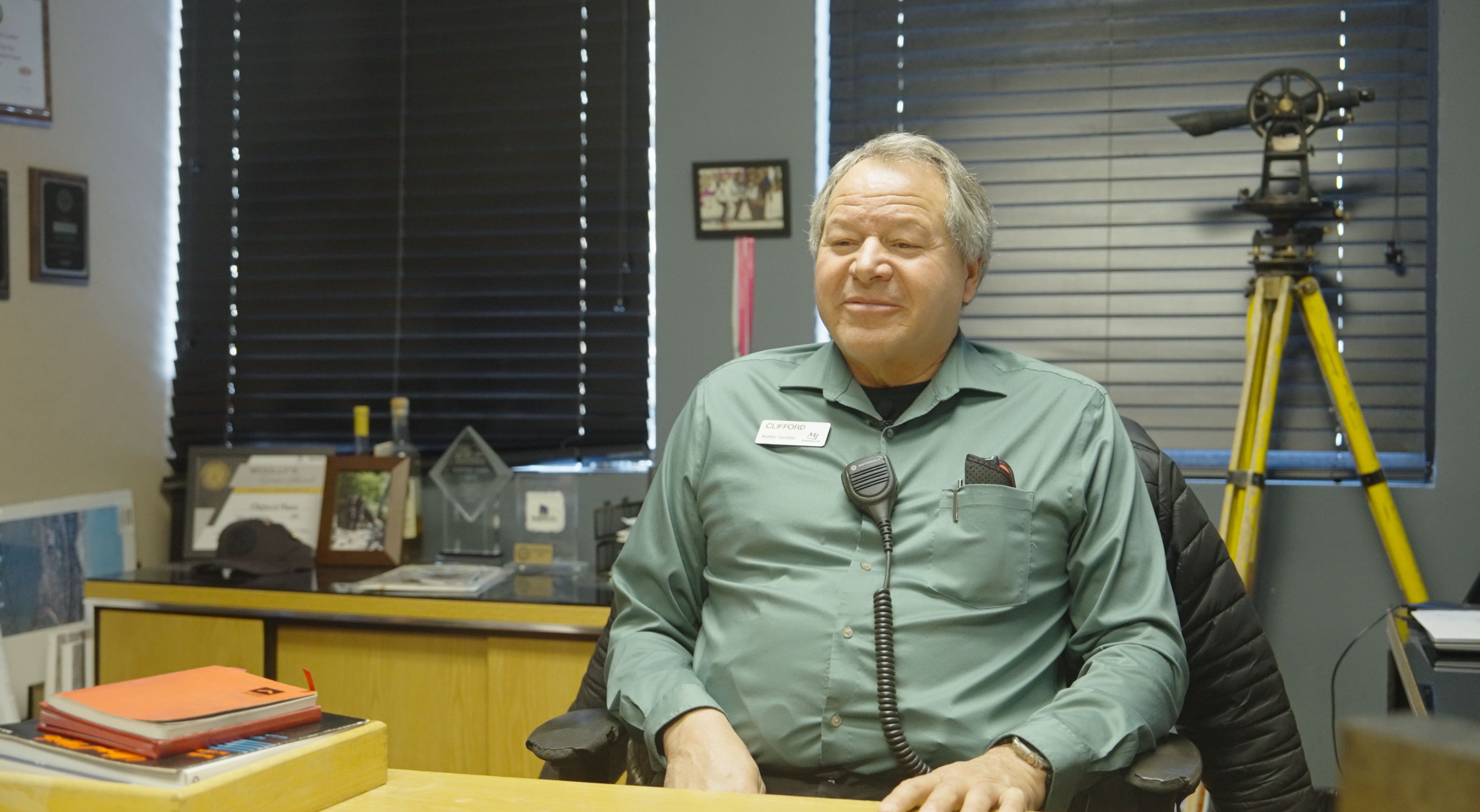
Photo: Clifford Mann sits at his desk at Mammoth Mountain.
Proud of his legacy, Clifford enjoys his work each day and acts as an animated storyteller when asked about his history. His memory is remarkable; 52 years on, he can tell you every detail, down to an exact date or how many inches of snow fell. The man is a legend, brash and badass and unable to quit. While we sit in his mountainside office on the top floor of Mammoth’s lodge, he pulls out photos and memorabilia from his career to add another lens to his exceptional story.
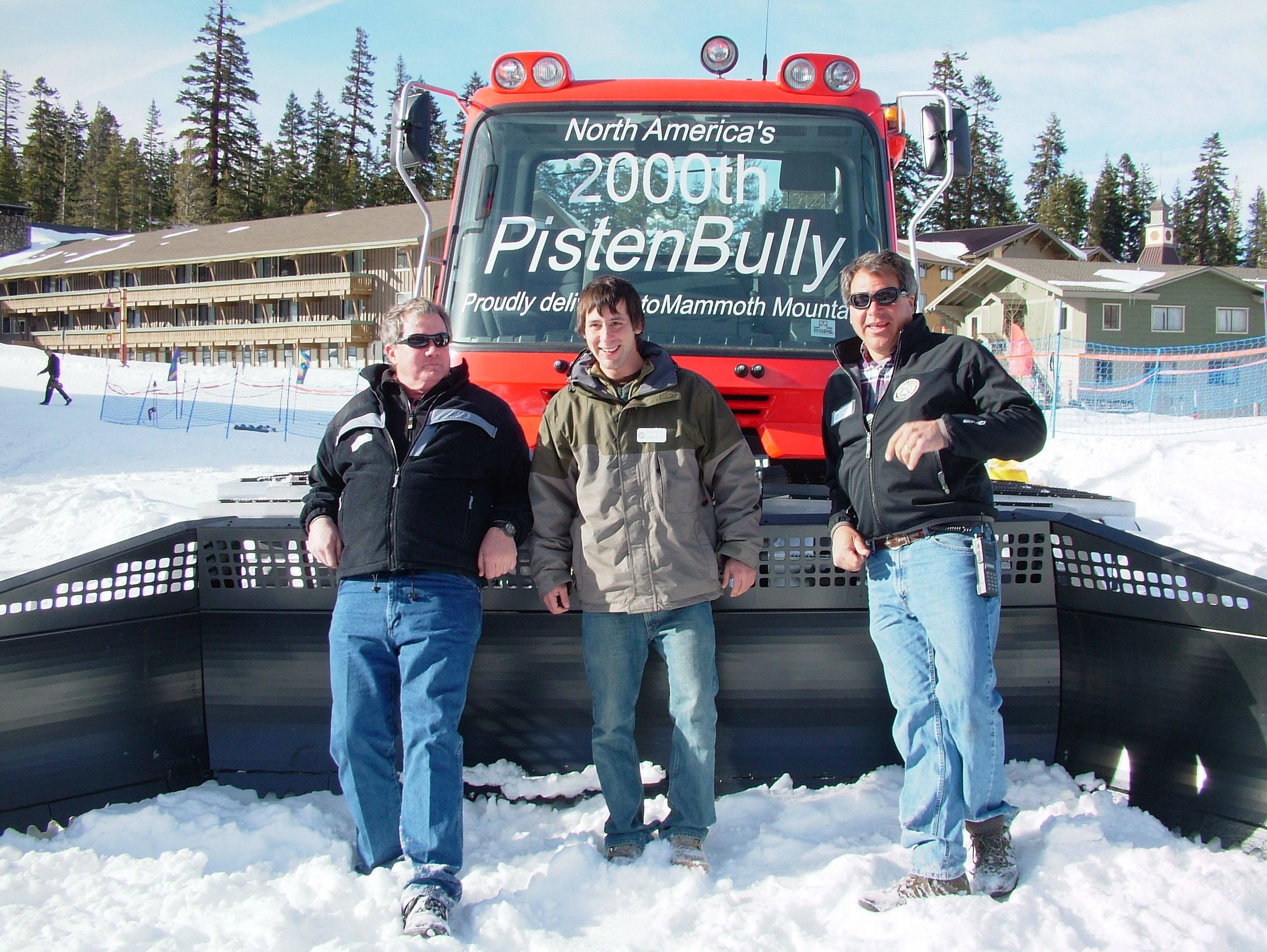
Photo: Clifford Mann (R) standing in front of North America's 2,000th PistenBully - proudly delivered to Mammoth Mountain.
Mammoth Mountain, centrally located in California’s Sierra Nevada mountain range, towers at over 11,000 feet, making it California’s highest ski area. It is a huge mountain, situated on the rim of a volcanic caldera in Inyo National Forest. Snow here falls down in feet, not inches. When blizzards strike, they shut down highways and major access points, sinking the town of Mammoth Lakes into isolation, sometimes for days at a time. What results is a skier’s paradise: Heaps of snowfall. Picturesque views of the Minarets when the sun finally sneaks above the clouds. Perfectly groomed pistes. Best of all? Snow is so expertly managed here that visitors are often skiing into the summer, sometimes as late as mid-August. Today, Mammoth is heralded as one of North America’s best ski areas, home to huge competitions, some of the continent’s greatest athletes, and a fantastic variety of skiable acreage.
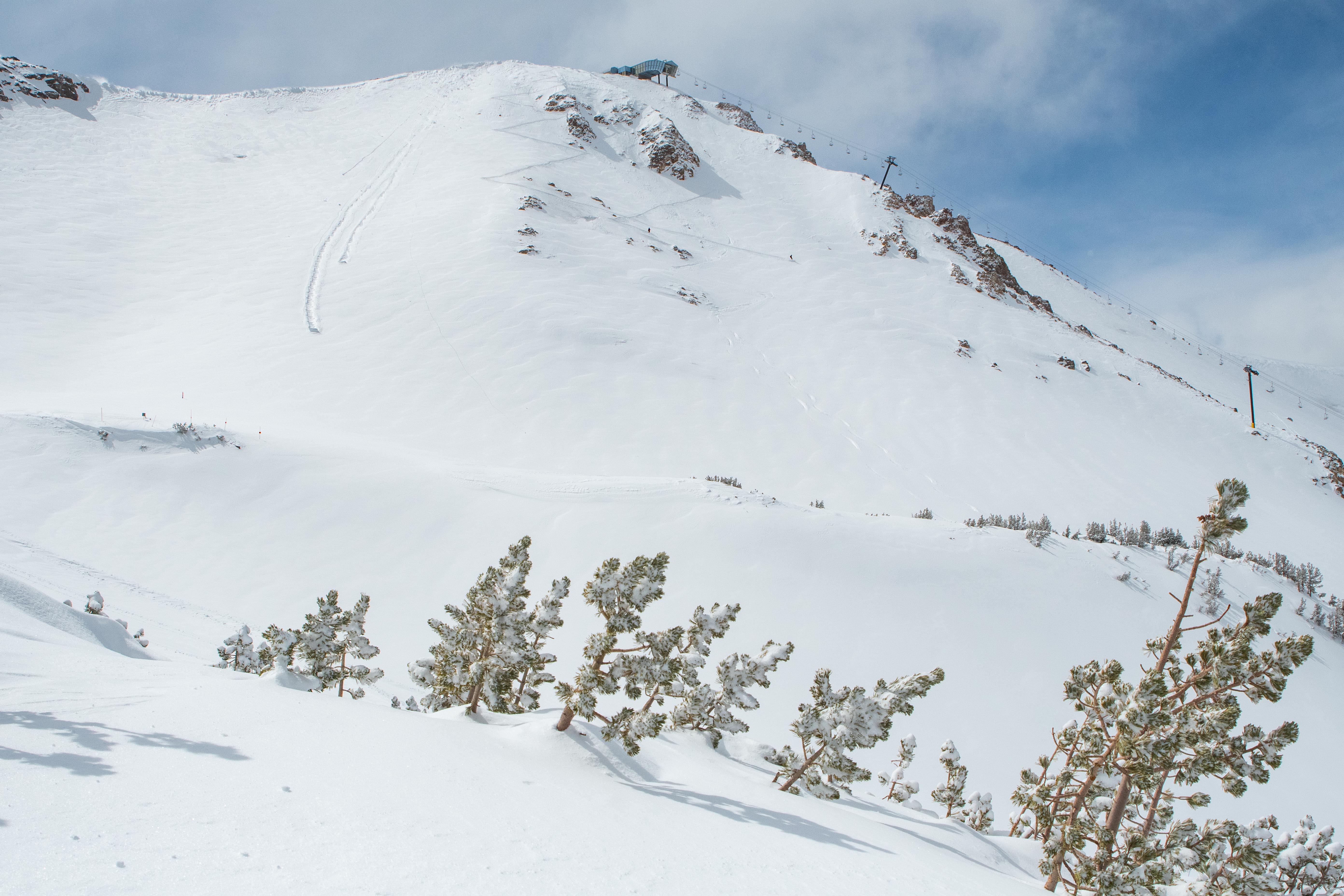
Cornice Bowl at Mammoth Mountain, where steep terrain and deep snowfall necessitated the creation of the winch. Photo: Blake Kessler.
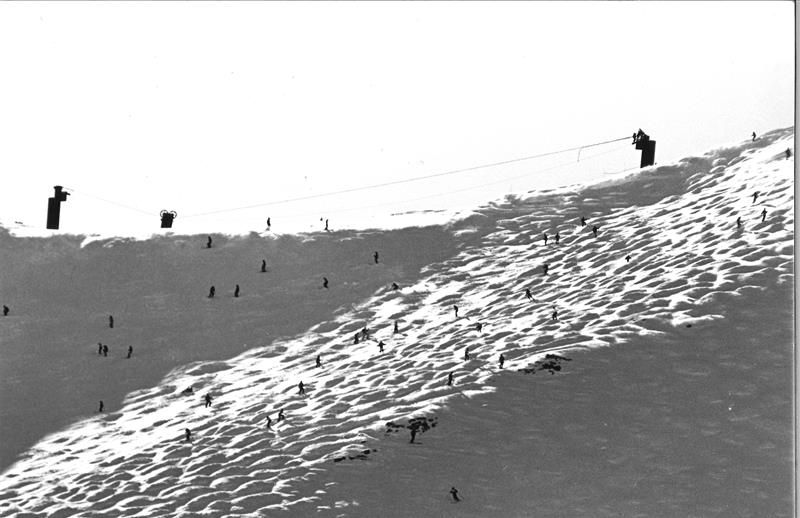
To set the scene and begin the story of the PistenBully winch, Clifford shows us a picture of Cornice Bowl. The famed Cornice Bowl arches across the top of Mammoth Mountain, a sweeping and gorgeous run that is frequently photographed. Accessed by both the Gondola and Chair 23, this popular trail allows intermediate-to-advanced skiers to feel like they are on top of the world.
In 1982, Clifford Mann was one of the team members working on building Chair 23, alongside Mammoth's founder Dave McCoy, Mammoth's Director of Slope Maintenance Roger Sorenson, and Lift Engineering’s Jan Kunczynski. Clifford’s title at the time was Director of Snow Removal, which was a big job in the Sierra. With more than 15 years of heavy equipment operation experience at this point, and all sorts of machinery at his disposal due to his role at the mountain, Clifford was invited on a “fact finding mission” by Dave McCoy. Dave wanted to bring Clifford and Jan to see a logging operation.
“We all jumped on a plane, and we went up to Oregon,” Clifford explained. “We went to a manufacturer and took a look at the highline logging machines. They were using long winches – long cables to make their way up the mountain. That was probably the biggest place where people were yanking heavy loads up and down the hill,” he added. “So, we came back here and created a winch. That really sparked the design.”
In the early 80s, Mammoth’s Vehicle Maintenance shop was already pretty highly regarded by PistenBully. Whenever anyone from Valley Engineering (PistenBully’s North American predecessor) came to visit, they wanted to see what the shop had created that season. Winters at Mammoth tend to be some of the gnarliest in North America, requiring the mountain to operate with a high level of self-sufficiency and determination. When something broke or a new issue arose, the operations teams would simply build what they needed with the resources they had available. It was a huge part of PistenBully’s research and development practice to have Mammoth show the PistenBully team their ideas and say, “Can you make this adjustment?” “Can you change this part here?”
“The Mammoth Sierra winter would destroy something [on a machine], and we would try to fix it,” Clifford told us. “Make it a little stronger. Change it. Then we'd task it out to PistenBully... The engineers in Germany would go, “Okay, we can do something similar.” The Sierra and the Cascades are really the true test of a snowcat. You get a bunch of really heavy, dense snowfall. Definitely a good testing ground.”
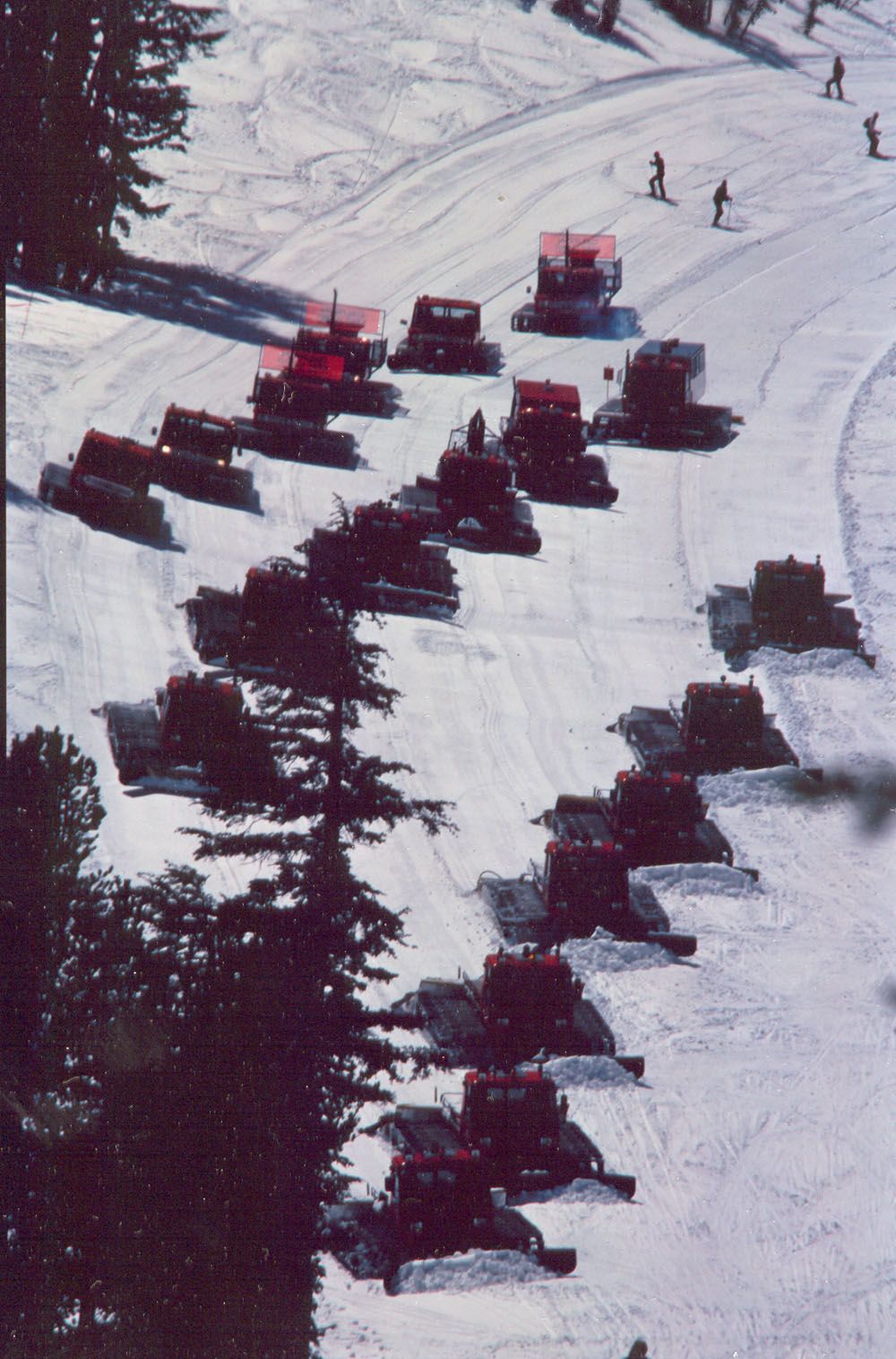
The extraordinary weather conditions of the high Sierra combined with the inventiveness of the Mammoth team made for a perfect storm. Once Dave McCoy and his team had seen the logging operation, they put their crews to work. The first iteration of the winch was a “yo-yo design.” Essentially, snowcats would get yo-yo'd down the mountain in the form of a rope and pulley system, powered by a 200-horsepower motor in the bottom of one of two towers on either side of the operation. The snowcat that made the inaugural trip was a PB140 with a stinger. The first day they tried it, Clifford recalled, the team stood around and looked at one another sharing a feeling of “Oh man, we’re really onto something here.”
They persisted in trying new ideas. Nothing was off the table. At one point they even tried to have a radio control system that would control the entire operation, which would have been a big step in 1982. Soon a whole fleet of PB270s was being used on the yo-yo, with machines getting lowered down the hill one at a time to push out the big, heavy cornice piece by piece. They’d get 10 or 12 of them lined up and let them down individually.
“You just let them down,” Clifford recalled. “They'd unhook, spool the cable back up, and they'd drive around the mountain, all the way back to the top.”
Next, they tried out a front-mount winch that came from PistenBully, a contraption that stayed at Mammoth Mountain for years, but wasn’t quite right. The team continued to pursue their own innovations, building yet another project in their shop. This time it was a big sled winch on the front of a PB200, complete with an electric retardant on it from a highway truck.
The first time Clifford got to go up to the top of Cornice Bowl in one of those PB270s and be let down the hill, he loved it. “Oh man,” he thought. “This is great!” He wanted to turn around and go back up, making another pass. He also knew by that point that this was a necessary innovation: Soon enough, a winch system was going to work. The grooming crew would be able to break through the big cornices or deep powder and provide a nice, even surface, and therefore a better ski experience for all ability levels.
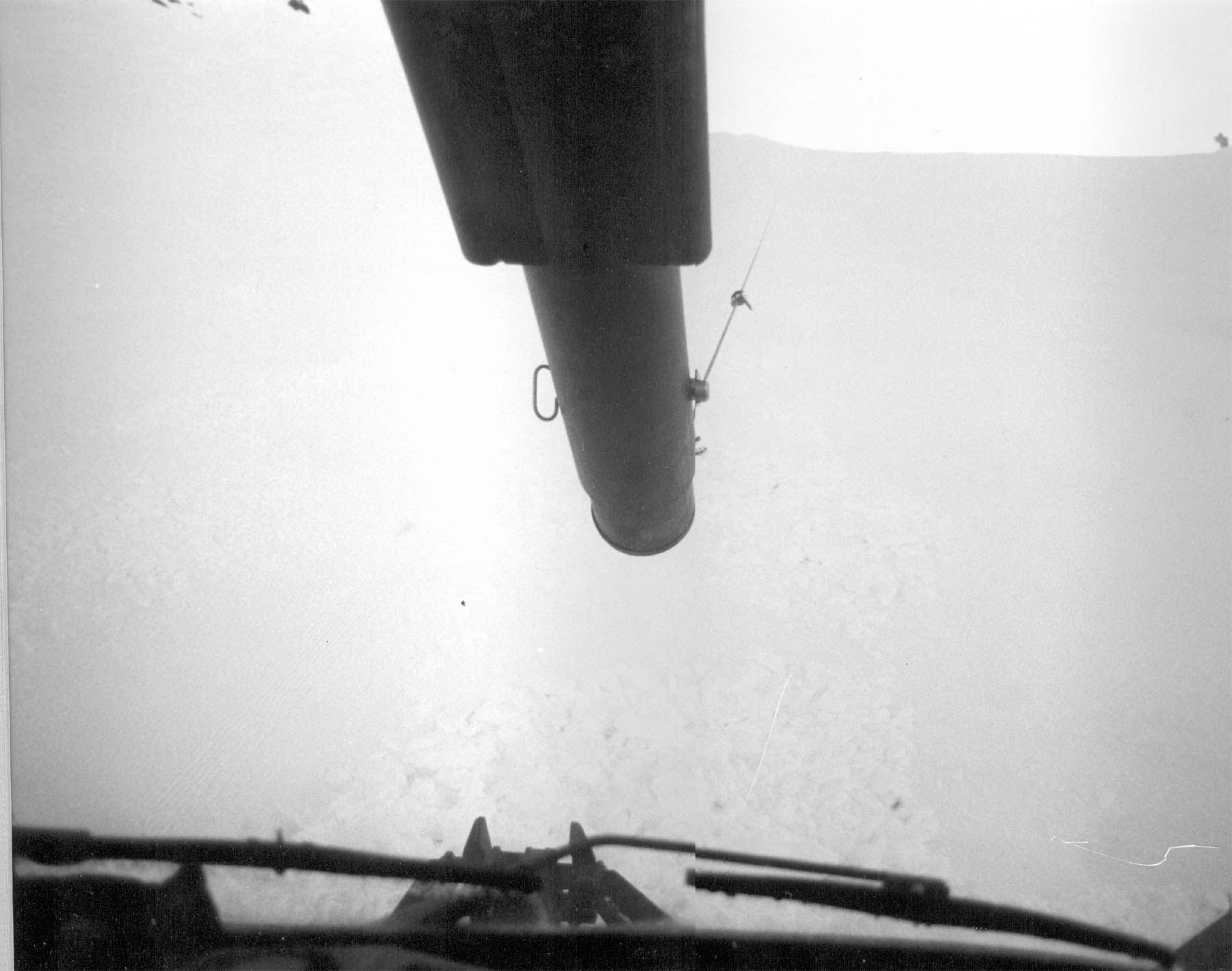
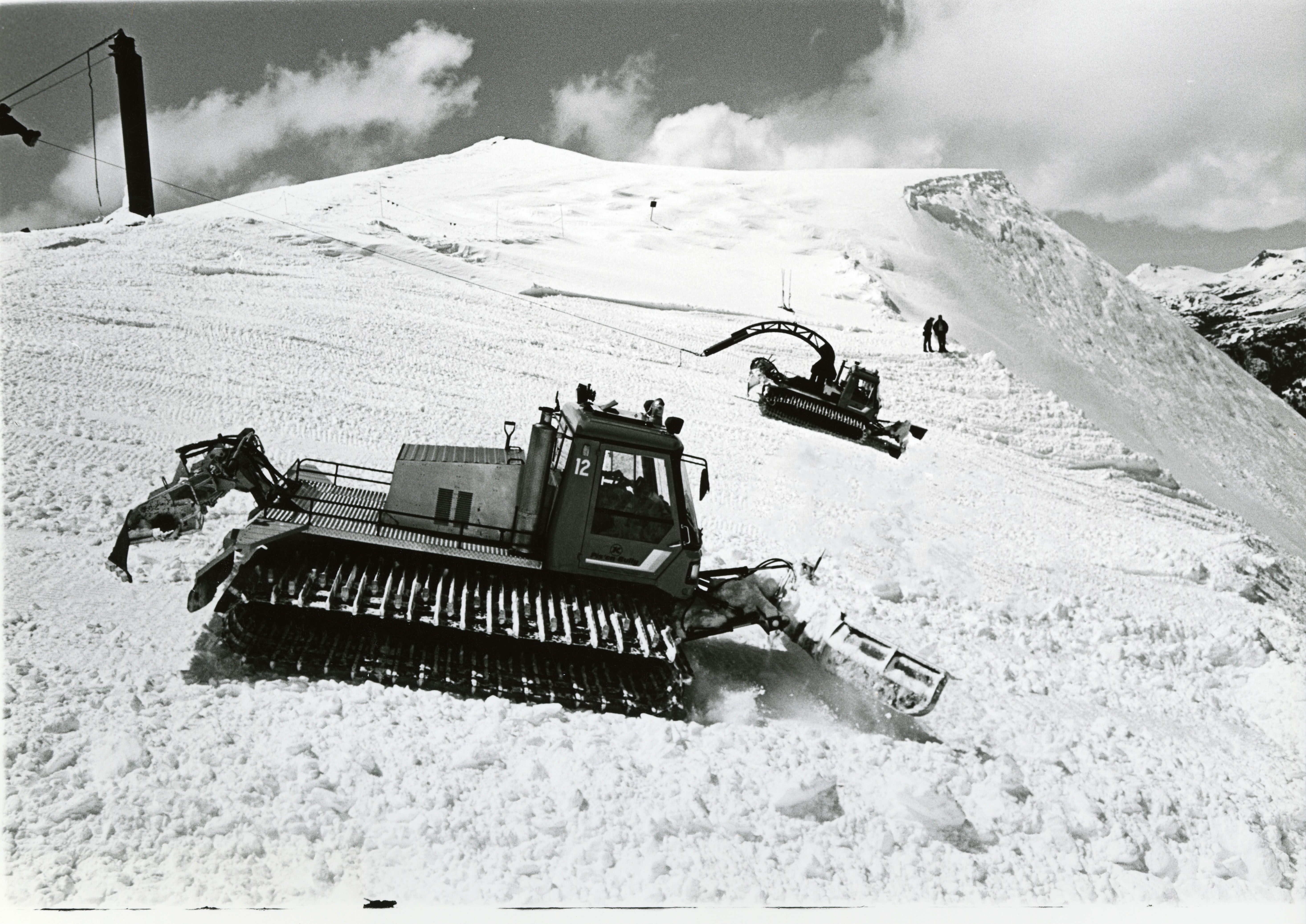
The team at PistenBully had noticed what Mammoth Mountain was doing, and they wanted to help. They saw the value in creating a machine with more power, especially when traveling uphill or on steep inclines. Initially, research and development started with a PB140, but it quickly progressed to a PB200. In time it became obvious that a self-contained capstan winch was the way to go. If a winch could be connected to the cat, it would be easier to operate, and far less expensive than building large winching infrastructure like the yo-yo at every mountain.
For all of these reasons, when PistenBully saw what Mammoth Mountain was doing with their winch iterations, they knew they had to deliver something good. By 1985, winch prototypes had been created. In July of that year, Mammoth’s two capstan winches showed up on the order form as a PB200 D.W. -- The W being for Winch, of course. The first of their kind. These two early PistenBully winches were put into operation for the winter of 1985 to 1986, marking forty years ago this winter.
Once Mammoth Mountain was the proud owner of two of the first-ever self-contained PistenBully winches, they got to work adding winch picks across their mountain. Winch picks are tall, metal towers that winch cables get hooked up to. Winch cats are then able to use these picks as an anchor point, moving a higher tonnage of snow more efficiently. Mammoth truly used the winch everywhere – from the top of the mountain to the main lodge.
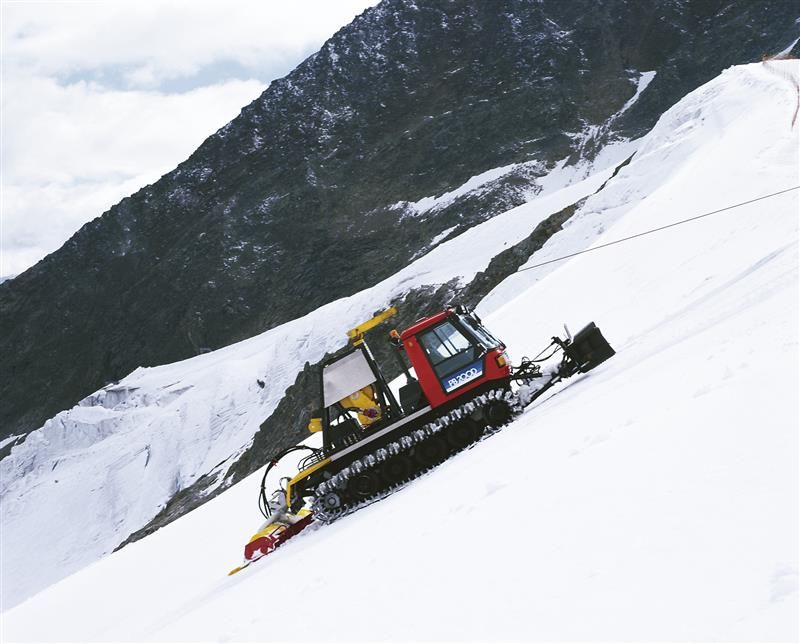
Today, Mammoth Mountain has 82 different winch picks and runs 3-5 winch operators for each shift of grooming every night, covering everything from race runs to the face of several chairlifts to some of the steepest trails. The modern-day PistenBully winch is a machine that helps move and maintain snowpack efficiently, capable of building roads, hauling stashes, pushing uphill, and padding the breakover of a run. A PistenBully winch is not optional for mountains like Mammoth; instead, it is the standard for proper slope maintenance. As Clifford aptly put it: “The the winch was a major game changer not only for here at Mammoth, but for the whole industry as well.”
Mammoth also uses winch cats in their world-class terrain park operations. Clifford was one of the key players in the development of the Park Bully, too. You can read more about that invention and Clifford’s role here.

